
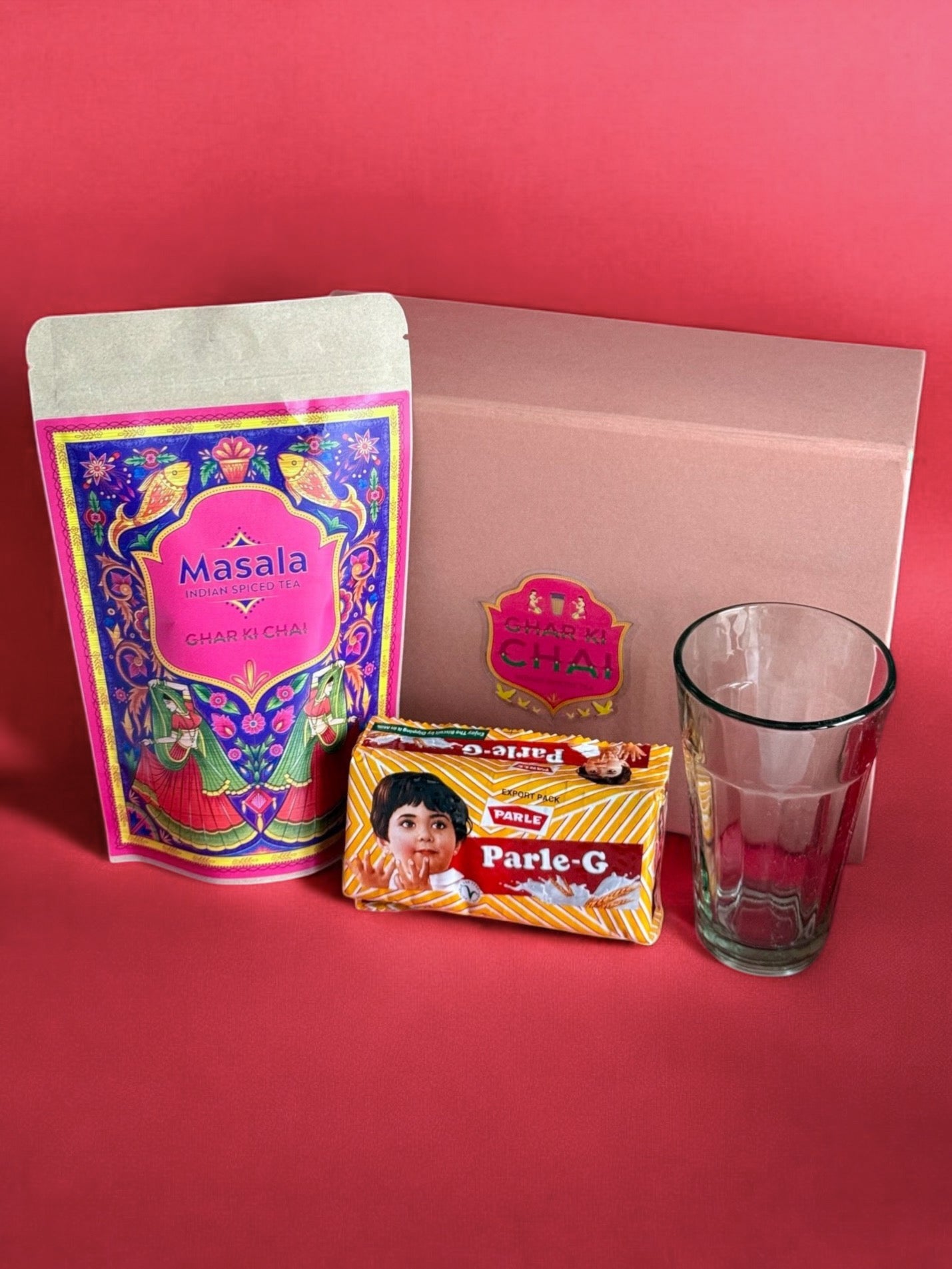
On one Ghar Ki Chai shoot, the table was almost finished. Masala was in place, the glass was ready and the red background was doing its job. Then a packet of Parle-G found its way into the frame.
It is a very ordinary object, which is exactly why it works. Chai photographs can become too polished very quickly. Add enough symmetry, perfect surfaces and careful styling, and the cup begins to feel less like chai and more like an advert for the idea of chai. A familiar biscuit changes the temperature of the picture.

Familiar beats decorative
There are countless things you can place next to chai: whole spices, brass spoons, flowers, linen, trays. They can all look beautiful. But beauty on its own is not always enough. The objects around the cup need to make sense before they make a picture.
Parle-G does that immediately. It brings in the memory of dipping a biscuit for slightly too long, of tea breaks that were never really planned, of the packet being opened because someone had made chai anyway. Nothing has to be explained. The association is already there.
Leaving some life in the photograph
The useful lesson from that frame was not really about biscuits. It was about resisting the urge to tidy every photograph into perfection. A good image can carry a little evidence of ordinary life. An empty glass waiting to be filled. A packet that has been handled. Something recognisable sitting beside something new.
That balance matters to Ghar Ki Chai. The photographs should still feel considered, but not so considered that the ghar disappears from them. Sometimes one very familiar biscuit is enough to bring it back.
