

Before coffee shops became places to work, Bombay had Irani cafés: democratic rooms of chai, bun maska, bentwood chairs and unhurried conversation.
There is a particular kind of café where the furniture seems to have stopped noticing time. A bentwood chair. A marble-topped table. A ceiling fan turning at a pace that suggests nobody has asked it to hurry. On the table, chai arrives beside bread split open and thick with butter.
For generations of Bombay residents, the Irani café was part of the ordinary machinery of the city. You could come for breakfast, a newspaper, an argument, a business conversation or simply somewhere to sit for a while. The surroundings were rarely luxurious. That was part of the point.
A room for the city
Irani cafés grew from waves of migration from Iran to the Indian subcontinent in the late nineteenth and early twentieth centuries. In Bombay, they became distinctive neighbourhood institutions. Their interiors developed a recognisable visual language: high ceilings, mirrors, wooden chairs, glass jars, tiled or chequered floors and, sometimes, wonderfully blunt lists of rules.
What mattered most was not the decoration but who could walk through the door. These were affordable, relatively informal places in a city organised by class, community and occupation. A clerk might sit near a student. A taxi driver might stop beside an office worker. The café offered something quietly radical: a table without much ceremony.
At their height, Bombay was said to have hundreds of Irani cafés. Today only a fraction remain. Their disappearance is partly a story of property prices, changing tastes and family businesses becoming harder to sustain. It is also a reminder that cities can lose their rituals long before they lose their buildings.
The order that needs little explanation
Then there is the bun maska.
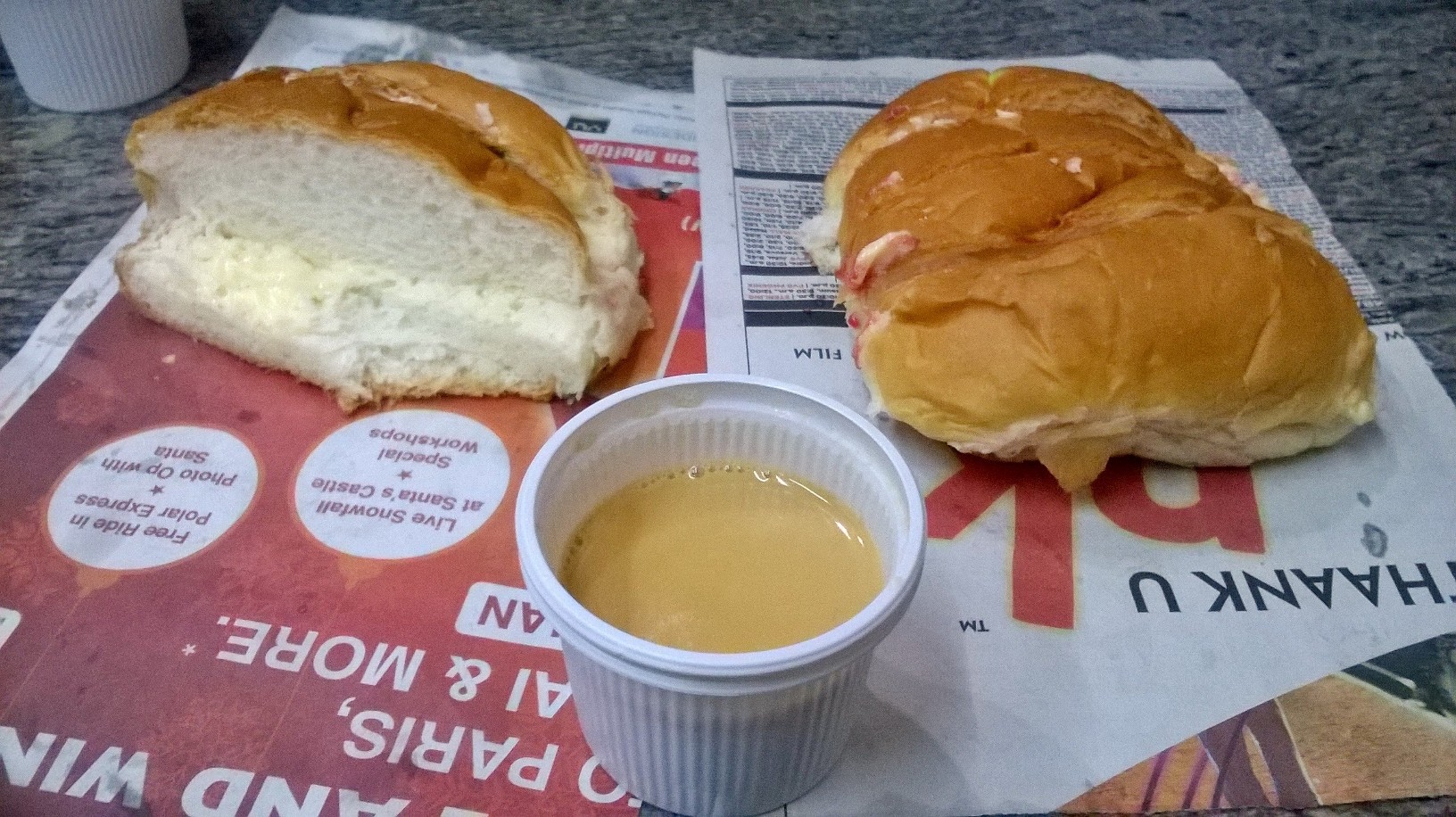
The formula is almost suspiciously simple: soft bread, butter and chai. Yet in the context of an Irani café it becomes something larger. The butter melts into the warm bread. The bread goes into the tea. Breakfast becomes a small act of engineering carried out without instructions.
Menus expanded far beyond this pairing. Depending on the café, there might be eggs, kheema, pastries, mawa cake, biscuits, berry pulao or raspberry soda. But chai and bread remained the grammar of the place. They were inexpensive, quick and difficult to improve through unnecessary complication.
Perhaps that is why the Irani café now feels so different from the contemporary idea of a café. There is little theatre around the drink itself. Nobody needs to tell you the provenance of the tea before pouring it. The cup is important because of what happens while it is on the table.
The art of staying put
Modern cities are exceptionally good at giving us places to pass through. Stations, lobbies, takeaway counters and screens all keep us moving. The old café performed another function. It gave the city somewhere to pause.
That does not mean Irani cafés were hushed salons devoted to contemplation. Quite the opposite. They could be noisy, brisk and governed by proprietors who had little patience for nonsense. Some became famous for rules telling customers not to comb their hair, argue, flirt with the cashier or sit for too long. The contradiction is part of their charm. They discouraged lingering while somehow becoming places people remember lingering in.
And perhaps this is why photographs of these cafés can produce nostalgia even in people who never knew them at their busiest. The attraction is not simply old furniture. It is the idea of a room in which a cup of chai bought you temporary membership of the city.
Some of those rooms are still there. The fans still turn. The bread is still buttered. Outside, Mumbai has become taller, faster and more expensive. Inside, for the length of a cup, there remains somewhere to sit.
Image credits: Britannia Café photograph by iranichaimumbai, CC BY-SA 2.0, via Wikimedia Commons. Bun-Maska photograph by Anoopb15, CC BY-SA 4.0, via Wikimedia Commons.
