
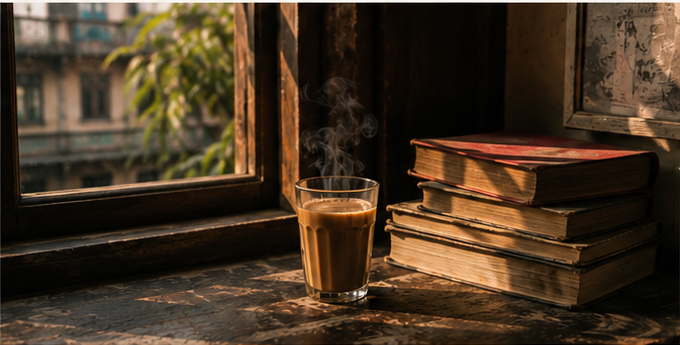
There is a moment in many Indian homes when a visitor has barely crossed the threshold and the first question arrives. Not what brings you here, not how was the journey, but something far more practical: chai, paani lijiye?
The words are ordinary. Tea? Water? But the exchange is rarely only about thirst. It is a small piece of social choreography, learned so early that nobody needs to explain it. The host offers. The guest often refuses once. The host asks again. Somewhere in between, everyone understands that the visit has properly begun.
Before the conversation
Hospitality in an Indian home often appears as action before it appears as language. A chair is cleared. The fan is turned towards you. Somebody disappears into the kitchen. A plate materialises with whatever is available, perhaps biscuits, namkeen, fruit or something that was never intended for guests but is suddenly presented as if it was.
Chai fits naturally into this rhythm because it creates time. It gives the room a few minutes to settle. Cups need to be found, milk warmed, a tray assembled. By the time the chai arrives, the formal edges of the visit have usually softened. Coats are off, phones are down and the real conversation can start.
The gesture changes with the household. In one home it may be strong tea in small cups. In another, an electric kettle and mugs. Some families insist on snacks; others regard tea itself as sufficient. The details are different, but the instinct is familiar: you should not sit in someone’s home without being offered something.
The offer beneath the offer
There is also a useful ambiguity in the phrase. Chai, paani can sound casual, almost throwaway, yet it places the guest at the centre of the room. It says that your arrival has changed what everyone was doing. Even a short visit deserves interruption.
That is why the ritual can survive even when everything around it changes. It works in a flat in Bengaluru, a terrace house in Leicester, a student kitchen in Manchester or an office where the only available tea comes from a machine. The equipment is not the important part. The offer is.
For people who grew up with it, the absence of that offer can feel strangely noticeable. Not rude, exactly, just unfinished. Something is missing from the opening minutes of the visit. A conversation has started without its customary punctuation.
What travels with us
Many rituals become more visible when they leave home. In Britain, the Indian instinct to offer chai meets another strong tea culture, but the meanings are not quite identical. One may be an everyday brew, the other an act of receiving someone. In British-Indian homes, the two often blend happily. The kettle is quicker, the mugs may be larger, but the reflex remains intact.
Perhaps that is why such a small phrase carries so much weight. Chai, paani lijiye? is not a grand statement about hospitality. It is much better than that. It is hospitality made ordinary, repeated so often that care begins to look like habit.
And when the guest finally says yes, the room can get on with what everybody came for.
