
Some objects are packed because they are useful. Others come because leaving them behind would feel strangely impossible. The masala dabba belongs somewhere between the two.
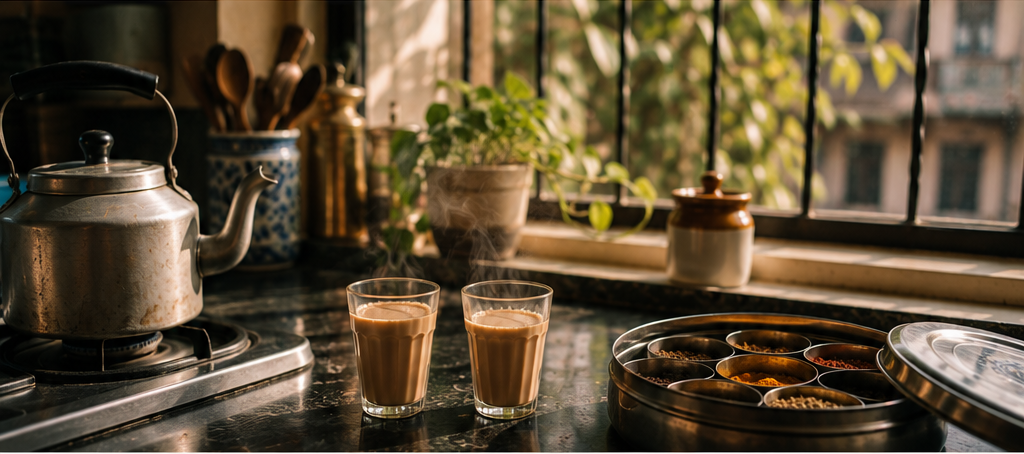
In many Indian kitchens, the round steel box sits close to the hob, its smaller tins holding the spices reached for without much thought. Cumin, turmeric, chilli, coriander, mustard seeds. The exact arrangement changes from home to home. That is part of its charm. A masala dabba is less a standard set than a portrait of the person cooking.
When families move countries, objects like this can take on a different weight. A pressure cooker, a steel plate or a spice box is suddenly doing more than its original job. It carries a familiar way of moving around a kitchen. Open the lid, lift a spoon, hear the metal touch metal, and a room thousands of miles away can feel briefly close.

The interesting thing is that the dabba rarely stays frozen in time. A London kitchen might add smoked paprika next to haldi. A family recipe may start using a spice bought from a Turkish grocer or a Caribbean supermarket. Ingredients shift, habits adapt, and the box quietly records the change. Home is preserved, but it is also edited.
Chai has the same quality. The cup made in a new city is never quite the cup made somewhere else. The milk is different, the water is different, the weather outside certainly is. Yet the gesture survives. A familiar spice tin opens. A pinch goes into the pan. Something recognisable begins to rise with the steam.
Perhaps that is why ordinary kitchen objects can become so sentimental without ever looking precious. The masala dabba is scratched, practical and usually hidden away in a cupboard. It does not announce itself as an heirloom. It simply keeps being used, meal after meal, until one day you realise it has travelled much further than the spices inside it.
