
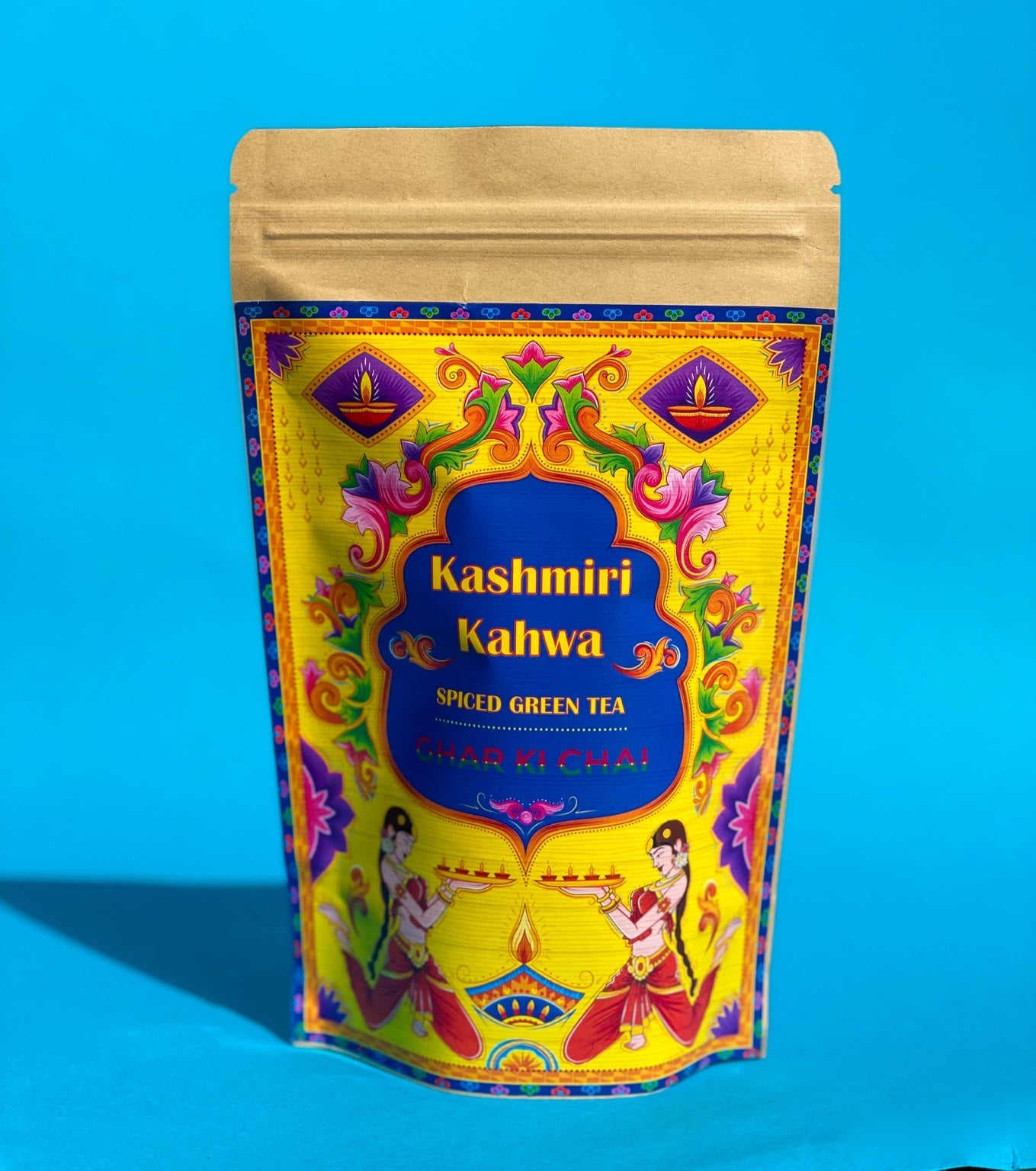
Put several Ghar Ki Chai packets next to one another and the first thing you notice is not the typography or even the illustrations. It is the colour. Adrak leans into hot pinks and reds. Sulaimani sits against a burst of yellow. Kashmiri Kahwa arrives in blue, turquoise and gold. The flavours belong to the same family, but they are not dressed alike.
That distinction matters more than it might seem. A chai range can quickly become visually repetitive. The same pouch shape, the same logo and the same broad promise can make every flavour start to blur into the next. Colour became the simplest way to let each one keep its own personality while still feeling recognisably Ghar Ki Chai.

Colour before copy
When a packet is sitting on a shelf, a kitchen counter or the edge of a photograph, nobody studies every detail first. They register shape and colour. So each flavour needed to communicate something before the name was even read. Adrak had to feel punchy. Kashmiri Kahwa could afford to feel brighter and more jewel-like. Sulaimani needed its own visual rhythm entirely.
The aim was never to turn flavour into a literal colour chart. Ginger does not have to be pink, and Sulaimani does not have to be yellow. It is more about atmosphere. The palette gives you a first impression, then the illustrations and wording do the rest.

Different packets, one shelf
The harder part is keeping that individuality without making the range look unrelated. The borders, proportions and decorative language do much of that work. Even when the colours shift dramatically, there are enough repeated cues to hold the family together.
That balance is something we keep returning to. Too much consistency and the flavours lose character. Too much freedom and the range stops feeling like a range. The useful middle ground is where you can recognise the packet from across the room, then identify the flavour a moment later.
Kashmiri Kahwa perhaps shows that idea most clearly. Against blue, yellow and gold, it feels very different from Adrak or Masala, but it still belongs beside them. That is the point. Each chai gets to have its own room in the house, without pretending it lives somewhere else.
